Thursday, December 8, 2011

week 15 - Video Essay Reflection behind the scenes
I love making films; I have love editing clips into random videos, of crazy or interesting stuff. This project turned out to be a huge struggle due to a lack of adequate technology. In the past I was lucky enough to have access to adobe premier though my school which allows a huge advantage in editing options. I do enjoy projects like this but I did wait till the last minute, and I was on the retreat all weekend so feel like I was not able to put my full effort into the video.
However the process and idea behind the project is superb, I wish I could have more final projects like that. It was really interesting to see what people learned and gained from this class. I feel like I could have expanded more on the topic had it been something more like “the most fascinating aspect of this class was…”, not because I didn’t like the topic that was given, rather I felt like my experience in the class was one of review. I feel that had this class been my first exposition of the synoptic characteristics of the Gospels it would have been very life changing. I do remember what it felt like to learn that most of Jesus’ followers immediately believed him to be more humanistic and more of a teacher. I was surprised to learn the historical context of Jesus’ life. He was not the only man attempting to reform Judaism and call people to love. He was present among man self proclaimed prophets and teachers who held similar convictions, as well as some other radical ones.
I did learn from this class that there was a larger population of Jesus scholars who did not belong to the Fundamentalist movement; scholars who had actually attended prestigious universities. I knew of a few in the past I’ve read a book by a Jesuit scholar, Pierre Tielhard de Chardin, who did his work to rectify religion and the evolution of Humanity. I have also read the work of Karen Armstrong her recent book titled “The Case for God” in her novel she discussed much of the early life and evidence for the historical Jesus. Shortly after she dove into the metaphysical and faith based ideas surrounding faith life.
My video project was interesting because I had to choose an aspect of the class that didn’t truly stem from the content of the class but rather the arrangement of the assignments. It was very unconventional and I liked it. I admit some weeks the thought of a blog post made me cringe, however some weeks I feel that I could pour out ideas into my blogs. I was largely dependent on how I was feeling that week. Unfortunately my Video essay did not come around at a good time for me. However I still feel like I was able to turn a good result despite the complications.
Thursday, December 1, 2011
Week 14 - The Martyrdom of Paul
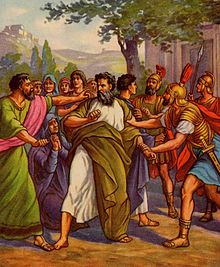
According to Marcus Borge’s the first Paul, Paul’s death is surrounded by uncertainty. As stated by Borge the writer of Luke and Acts did not want and both of his books with a roman condemnation. Judging by this fact and this fact alone it serves to follow that a book of acts would not end with the death Paul. The roman Emperor Nero was in power at the time of the Paul’s death and it was overwhelmingly likely that Paul suffered a death similar that of many Christians at the time. Emperor Nero used the Christians as a scapegoat for a mighty fire that destroyed nearly half of Rome. History proves that Nero started the fire to begin with in fact it was a ploy to rally anti Christian support underneath him. After this fire Nero went on a rampage massacring hundreds of Christians; yet they continued to survive.
I find that is quite Remarkable that finally after the Romans finished persecuting the Jews the Focus then shifts to the Christians. This actually leads me to understand that the beliefs of the religion had nothing to do with the executions and persecutions of the Jews or the Christians, but the power and Unity that the religions aroused in their peoples.
Christianity has Paul to thank for that. Through walls efforts to Christian expanded throughout the entirety of Europe. Paul’s Missions stretched all away from Spain back to Rome and even parts of Jerusalem. It can be understood that because of his widespread conversions by single man to Christianity in Europe and the Middle East was able to thrive under similar ideas. This created a unity among all Christians whether not they realized it. And thus when Nero began to persecute and execute Christians; no amount of propaganda physical violence, or threats could halt movement.
In many of Saint Paul’s letters, there is differing evidence concerning the location and manner of his death. The most common image that we think of is near a summoning Paul to have him be headed. However it is far more likely that Paul was just another death among the many Christians who died under Nero's reign.
I find it really interesting that Paul’s death was not separated from that of many other Christians. Because his death is not separated Paul; is put on the same level as any other Christian martyr. Because of this to communities that Paul established are able to better identify with Paul, as well as many communities after that. To this day and Christians can identify more with Paul than they can with Jesus because he is more human.
Thursday, November 10, 2011
Week 11 -- Heightening Christology: Jesus Model of Living to Lord and Savior
According to the recent lectures and knowledge amassed from my Catholic high school education; Jesus’ persona became more and more divine as the years after his death progressed.
This conjecture (ooh big word) makes all the more sense to me as I contemplate it. Automatically I think of other various religions I have studied in my comparative religions courses. During those classes I noticed often that the originators of many religions began as normal people surrounded by extraordinary circumstances. Yet as the literature that surrounds their deeds grows more distant the deeds and the person them self seem all the more extraordinary.
I’ve read of many examples of this phenomena, for example the Siddhartha Buddha, he never claimed to be anything more than human, neither did his followers although they considered him in the highest regards and an enlightened human being. Yet in the years following his death subsequent followers became accustomed only with the oral tradition of his incredible wisdom and slowly his identity became detached from humanity and placed slightly above. This occurred in Buddhism to a slight degree but not so far as to place him on the level of a deity, something not condoned by the religion.
I certainly feel that this could apply to Jesus while I am not bringing into question his divine nature nor his noble mission or self sacrifice, I do feel that the tendency of people to elevate leader to uber-human levels still applies. The evidence lies (as discussed in class) within the Gospels, as we look back at the Chronology of the four Gospels, the Christology of Jesus certainly rises reaching the utmost height in John’s Post and even Pre- Easter Jesus.
In the case of Christianity the elevation of Christ come with a purpose, a purpose that grows as the religion of Christianity developed out of the “Jews For Jesus” movement as one of my high school teachers affectionately called the Jewish sect that held growing popularity of the disciples teachings.
Ultimately my point is simply that even if Jesus were a mere mortal, to put it in a cliché manner, I find that the development of his divinity make sense and does not come to a surprise that as years passed Jesus became viewed more God-like than the humble teacher that is described in Mark.
 ---->
---->Thursday, November 3, 2011
Week 10 Perceptions of God
Considering a Majority of my wiki group project focused on the various images of God throughout time, I thought it was interesting that in “The Color Purple” by Alice Walker, the Character Celie has trouble with her image of God. Celie can’t seem to get the “White Folk’s” God out of her mind. In most churches from the time they depict a very classic depiction of Jesus as the Aryan man with dark blonde hair and soft blue eyes. Only Celie has trouble with this interpretation, because she can’t identify with God or Jesus. In fact due to hard ship she feels the need to turn away from hardship because of like any other man Jesus and God weren’t there in her mind to help her through the sorrow filled years of her life. She humanizes God to the point of him being absolutely unreliable.
I can identify with her struggle to view God as more than human and feel the frustration that nearly every person experiences when hardship rears its head; whether its sorrow, loss, anger, or despair. Many of us feel abandoned by God. We lose hope. I know I have. However the excerpt provides a message of hope. In fact I recall the infamous “Footprints” prayer, where God assures the person that in during all the hard times when they only “saw one set of prints” as opposed to both the person’s and God’s, that God carried them. The prayer like the passage inspires hope, it lets us know that we are not alone; in the worst of times God is there to carry us through.
The passage has a more symbolic and colorful meaning behind it than simply God’s accompaniment, Shug contrasts Celia’s pessimistic view of God with her words. She describes a God who is always present (whether we choose to notice it or not), one that is ageless, genderless, fearless. She assigns God as an IT. An IT that doesn’t care if people don’t try to please IT. An IT that appreciates all the things people do to try and please IT. But most importantly an IT that just like everyone else wants to love and be loved.
The Core of Shug’s message being that people should stop trying to criticize all the prayers that go unanswered and things that go wrong, but simply stop and notice all the little thing that IT has already done for them. She provides the example of the color purple of the wildflowers that brighten the day as she walks past.
I find Shugs message to be an affirmation of my own beliefs and even more eloquent and hopefull description about God she claims that she “couldn’t find God in a Church” and I couldn’t agree more. Not to discount the mass however but to acknowledge that God’s presence exists in everyday life and that God is not a vengeful God but rather the loving IT that may have even had “hair like sheep’s wool”, an IT that just wants to be LOVED.
Friday, October 28, 2011
Immediate 2nd Coming??? (Imminent Echatology) week 9
No Christ did not return years after he left his disciples, but he left them with the impression that they should spread the good news as far as they could. they interpreted this message as a imminent need for Christs coming. Especially looking to the letters of Saint Paul and the acts of the apostles, it becomes clear that they beleived that Jesus would return to Judge the world in their own life times.
This beleif that Jesus would return is defined by Borg is Imminent Echatology, this led the Disciples on the fast paced attemps to convert and spread the good news to help as many people as they could before the second coming. each Gospel writer has its own interpretations of how soon Jesus would return. from Mark-to Matt- to Luke- to John, in that order the time that Jesu would return moves futher and further into the future.

This beleif that Jesus would return is defined by Borg is Imminent Echatology, this led the Disciples on the fast paced attemps to convert and spread the good news to help as many people as they could before the second coming. each Gospel writer has its own interpretations of how soon Jesus would return. from Mark-to Matt- to Luke- to John, in that order the time that Jesu would return moves futher and further into the future.
Friday, October 14, 2011
Week 7 _ The Jesus you probably know
Blogger lost the rest of my blog it was short only about two paragraphs due to my time spent on my wiki and other midterms
Thursday, October 6, 2011
Gospel of Mark
The Gospel of Mark is believed to be the main source for two of the other Gospels, Matthew and Luke. I find it interesting that Mark shotguns his point right up to his readers in the third pericope. The entirety of Mark’s Gospel revolves around this theme: The Kingdom of Heaven is at hand and sinners should repent and “change their hearts and live” because “now is the time”. Mark’s purpose is to spread the word as fast as possible to as many Jews as possible. Just from this pericope, and the repetition of the phrase “Kingdom of Heaven” as opposed to “Kingdom of God”, I can infer from prior research in my high school years that the author or authors of Mark had a Jewish audience in mind when composing the Gospel. According to Jewish law at the time it was forbidden to speak or write God’s name which would have been “YHWH” or “Yahweh” to include the vowels that were left out when God’s name had to be recorded. There for by using “Heaven” in place of “God” we know that Mark was showing respect for Jewish tradition in order to appeal to his intended Audience.
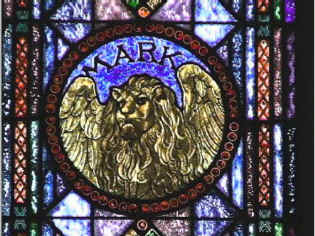
Personally I find it fascinating that so much information can be discovered from a single phrase, when it is analyzed for diction. However even more information is hidden in that one theme “Now is the time” Mark obviously was expecting a very rapid return of Jesus. In St. Paul’s many letters we can see that he also has a very immediate expectation of Jesus’s second coming. Again from my high school education I recall Paul haveing direct contact with the desciples one a few occasions, there for I can assume that the view of rapid second coming, can be associated with the very early movements of christianity, and thus even without a carbon dated copy of the text I can assume the authors must have written oral tradtions that began in the days of St. Paul, making Mark one a very early Gospel.Moving on, Mark is said to have a lower Christology of Jesus. He focuses for the most part on the view of Jesus as a teacher, but his Gospel is not without references to his divine authority. In Mark 21-28, Jesus is witnessed casting a demon out of a person in the synagogue. The demon addresses Jesus as "the Holy one from God" to which he orders it to leave, and the demon responds. The people around him wondered how this mere teacher commanded such authority. From the onset Mark makes it clear to his audeince that like many prophets and faith leaders before him must have had God work through him in some way. Only from the demons address is there any hint of Jesus's divine nature. This is a characteristic of Marks Gospel which is one of the many examples that lead to the overall low Christology of Jesus.
Reading this I feel that Marks Gospel may be truer to actual events of Jesus's lifetime, perhaps may be full of more historical content than its counterparts. Every child knows from the game of telephone that as a story is retold even with oral tradtion the original content may become very skewed by the last person. Considering that Mark was the earliest written of the four Gospels his text might be found to be more historical. I feel that Jesus probably was a very humble person that focused on his teaching rather than his identity when trying to teach his wisdom. I find a more Human Jesus easier to identify with.
Friday, September 30, 2011
Week 5
Jesus as the son of God was central idea that was widely understood to the vast majority of Christians what was less understood however, and has become a larger part of Christian faith, is his identity. Jesus the pre – resurrection Jesus he was both fully man and fully God as is now recited in the Nicene Creed by Catholics. Borg takes this concept even further by personifying what must have influenced Jesus the human, and how he must have developed his own faith through devout Judaism. Borg argues that Jesus’s Judaism is what most shaped his own beliefs outside of his own understanding that he was the son of God. As he says “Jesus was mystic” because Jesus was a man that experienced God vividly. The term Mystic was often applied to the various prophets.
Borg’s understanding of Jesus casts him in a different light that groups him with the prophets. However Borg makes clear that this thought applied mainly to the pre-Easter Jesus, meaning that Borg is attempting to understand a historical Jesus.
(Jesus was not a biker)
Further in the chapter, Borg decribes Gods trancendance as referenced in the Bible. The Bible alludes to a kind of supernatural theism that we understand today. However borg notes that the references describe a permeating presence, that exists throughout the universe.
I personally find the idea of a supernatural God that is above the Laws of the universe comforting, yet personally the notion of a natural permeation of being that ties every aspect of the universe together seems more possible. Yet faith in God is not based on reality rather hope and trust.
Thursday, September 22, 2011
Week 4 The Job of the Historian

(before I could find a topic)
The Historical Task
As Borg mentions the job of historian in vovles several steps and peeling back layers of interpretations. He explains that absolute veritable fact "is beyond the scope" of what any historian can achieve. I disagree with a point he makes concerning science however, he uses science as example of a field that is commonly associated with exactness. In reality history and science are very similiar. Members in both disciplines gather evidence and propose theories to explain that evidence. Scientistific and historical theories alike are not written in stone, both are reevaluated in light of a new archealogical find or the discovery of a new galaxy or element; in order to accomodate the new evidence. This point however is not the focus of his chapter. Borg truly wants to draw attention to the process by which historians articulate and breathe life into bits and peices of writings and scrolls.

Borg likens the work of a historian to that of a detective. Borge explains three distinct stages the "street stage" the "forensic stage" and the "formulation of a hypothesis". Historians have to begin thier work on the ground digging up clues and hints to recreate the world they are attempting to understand. In the case of the Bible, it is especially important to understand the biblical world and the struggles of political and economic forces of the time. Many people know that Rome ruled Israel during Jesus's lifetime. But fewer knew exactly how they governed the country. Fewer know about the role pontious pilot had in ruling the nation or the previous tranfer of power from herod the great to the rule under Rome.
Without more research to uncover a better understanding of the time in which Jesus lived biblical sholars can't hope to recreat the historical Jesus. The best that any historians can hope to come up with is a accurate picture of the jesus the man that lived and died under roman rule.
Friday, September 16, 2011

Thursday, September 15, 2011
Week 3 - Misinterpretations and early Christian Heresies
Upon a second reading through Borg's first chapters I could not escape the urge to reflect on the current misinterpretations by many who claim to be christian. Borg addresses those who follow "rapture" theology, calling attention to the zero-credibility of the idea. These rapturists, in my opinion break a cardinal rule of reading and understanding the teachings of the bible, by taking it literally. Specifically, the most symbolyic and metaphorical book in the bible--the book of "Revelation".
From what i have learned through out my high school curriculum on the old and new testaments and research of my own. I come to understand that most of what was written in the bible is heavily laden with opinions and hidden agendas of the writers. I know that these writers worked to compile several oral traditions, into a text form that was tailored to fit a specific christian communites needs. They are full of symbols and language that are meant to help the target audience understand the message.
More than 1600 years after the final Canon of the Bible was introduced how can anyone hope to understand a single message or teaching from the bible without first understanding all the factors that surrounded its writing.
If any rapturist even bothered to begin a critical read to understand the messages and metaphorical meaning behind the text of any book of the Bible, ESPECIALLY Revelation. I am certain that the person would understand how a only a literal understanding of the Bible severely restricts the value of any meaning that can be gleaned from its pages.
Furthermore, writing this blog has prompted me to comment on how stunned I am that these rapturist have recieved such large attention from the media recently. I have discussed how nonsensical I beleive the whole idea is I won't beat a dead horse. what bothers me the most is that only a few groups of christians have bothers to make the statement of distancing themselves from the "out there" groups. I feel that Christian Scholars should make it a priority to help the media sift out these nonsense based belief systems so that the greater worlds may have a clearer view of the values and teachings of the old and new testament are.
I feel that it's a philosophy that should be applied to many religions, particularly Islam. Muslims fight against quite a bit a discrimination because many americans don't bother to sift out the facts that many of these so called terrorists are not followers of true Islam, infact many are like these rapturists they are a small splinter group that because of the shock value of their actions recieve media attention. Niether are a true representations of either religion.
As Borg, brings up however just because early christians where "closer" to the foundations of the religion, this does not mean that every interpretation they had was accurate either. In fact Borg draws attention to the many heresies surrounding the early churches attempts to identify whether Jesus was fully human, fully divine, or some combination of the the two. Official Church teaching tells us that he was indeed both. Borg identifies one of the larger heresies, known as "docetism" that pervaded many early christian commnunities. Docetism, identifies Jesus as God merely appearing to be human, not actually Human. this belief removed the sense of oneness with us that made Jesus's sacrifice so important to the foundations of Christianity.
Ultimately I think that education about the proper method to attemtpt an interpreetion of the Bible or any historical or religious text would greatly benifit socielty as a whole to avoid many misinterpretations.
From what i have learned through out my high school curriculum on the old and new testaments and research of my own. I come to understand that most of what was written in the bible is heavily laden with opinions and hidden agendas of the writers. I know that these writers worked to compile several oral traditions, into a text form that was tailored to fit a specific christian communites needs. They are full of symbols and language that are meant to help the target audience understand the message.
More than 1600 years after the final Canon of the Bible was introduced how can anyone hope to understand a single message or teaching from the bible without first understanding all the factors that surrounded its writing.
If any rapturist even bothered to begin a critical read to understand the messages and metaphorical meaning behind the text of any book of the Bible, ESPECIALLY Revelation. I am certain that the person would understand how a only a literal understanding of the Bible severely restricts the value of any meaning that can be gleaned from its pages.
Furthermore, writing this blog has prompted me to comment on how stunned I am that these rapturist have recieved such large attention from the media recently. I have discussed how nonsensical I beleive the whole idea is I won't beat a dead horse. what bothers me the most is that only a few groups of christians have bothers to make the statement of distancing themselves from the "out there" groups. I feel that Christian Scholars should make it a priority to help the media sift out these nonsense based belief systems so that the greater worlds may have a clearer view of the values and teachings of the old and new testament are.
I feel that it's a philosophy that should be applied to many religions, particularly Islam. Muslims fight against quite a bit a discrimination because many americans don't bother to sift out the facts that many of these so called terrorists are not followers of true Islam, infact many are like these rapturists they are a small splinter group that because of the shock value of their actions recieve media attention. Niether are a true representations of either religion.
As Borg, brings up however just because early christians where "closer" to the foundations of the religion, this does not mean that every interpretation they had was accurate either. In fact Borg draws attention to the many heresies surrounding the early churches attempts to identify whether Jesus was fully human, fully divine, or some combination of the the two. Official Church teaching tells us that he was indeed both. Borg identifies one of the larger heresies, known as "docetism" that pervaded many early christian commnunities. Docetism, identifies Jesus as God merely appearing to be human, not actually Human. this belief removed the sense of oneness with us that made Jesus's sacrifice so important to the foundations of Christianity.
Ultimately I think that education about the proper method to attemtpt an interpreetion of the Bible or any historical or religious text would greatly benifit socielty as a whole to avoid many misinterpretations.
Thursday, September 8, 2011
Week 2
This week I have decided to focus on the particular topic of "flow". I found the concept of flow, effortlessly moving inbetween levels one and two of conciousness, very unoriginal. I do understand that the idea was transcribed to relate to the modern hypothesis in psycology, However I don't agree that Csikszentmihilyi, came up with something that was new. As I mentioned in class the concept of flow reminded me a lot of the buddhist beleifs about satori, a mental state in which the individual is no longer self aware, only the task at hand fills their being, whether is is composing music, painting or working out a complex math solution. I have experienced brief moments of satori, while painting or playing guitar. I lose the self awareness of everything happening around me and become completly absorbed in my work, a very peaceful state of mind. Mainly i think agree with what he explains concerning flow, and the benefits of thinking at that level. I just feel like the idea of that state of mind has existed for centuries.
Friday, September 2, 2011


Thursday, September 1, 2011
Who is Jesus - Week 1
Jesus, the man was born in Bethlehem, little information is known about his childhood, or his early life until his late twenties, when he began preaching. While he was alive he promoted a message of peace and love to everyone he encountered. his message was so profound that many people began to follow him and promoted his way of life. His followers believed him to be the Only Son of God. He was beleived to have performed miracle throughout his mission to spread peace. however some of the pharisees viewed him and his message as a threat to the stability of the Roman government at the time and sought to have him executed by The roman authorities.
I am a human being who beleives whole heartedly in the message and divinity of Jesus, I am a young exuberant college student, entering a new stage in life. I love the arts with a passion, however an equally strong passion drives me to persue my artistic endevours into more mechanical things leading me to an apreciation of physics. This appreciation has led me to the study of engineering.
I am a human being who beleives whole heartedly in the message and divinity of Jesus, I am a young exuberant college student, entering a new stage in life. I love the arts with a passion, however an equally strong passion drives me to persue my artistic endevours into more mechanical things leading me to an apreciation of physics. This appreciation has led me to the study of engineering.
Subscribe to:
Comments (Atom)